
The Racial Politics of Belonging
American WomanThis flow traces the novel’s challenges to racial categories, from Jenny’s identity and Jim’s history to the political uses of other people’s experience.
increasing Bearing strength in each event
 decreasing
Bearing strength in each eventdecreasingJenny Rejects a Category

Jenny Rejects a Category
A Political Argument
Juan tells Jenny that her Asian identity gives her a special obligation to lead the revolution.
Jenny refuses to be reduced to race or treated as a symbol for beliefs she does not hold.
Solidarity Without Ownership
Her response challenges the idea that racial identity automatically determines political duty.
Jim’s Wartime Exclusion

Jim’s Wartime Exclusion
A Racialized State
Jim Shimada is denied enlistment and incarcerated because of his Japanese ancestry.
The contradiction between American citizenship and unequal treatment shapes his lasting distrust of public institutions.
A Family Inheritance
Jenny grows up inside the consequences of a history she initially has to learn from outside her family.
A Black Neighborhood Under Siege

A Black Neighborhood Under Siege
Violence in Los Angeles
The authorities surround the cadre in a Black neighborhood, where nearby residents are injured during the siege.
The catastrophe exposes how revolutionary spectacle and state response impose danger on people who were not the actors in the conflict.
A Failed Solidarity
The group’s declarations of solidarity cannot protect the neighborhood from the violence around it.
The Store and the People
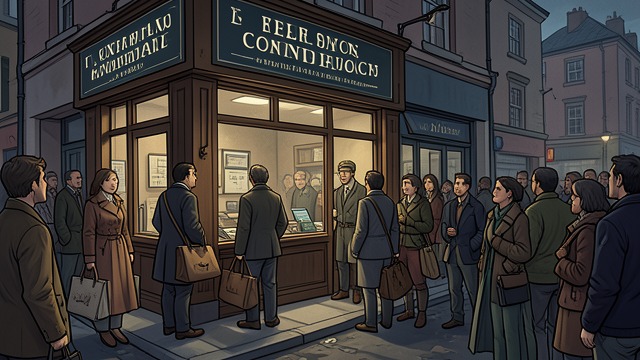
The Store and the People
An Argument About Ownership
Juan argues that the store’s profits come from a Black neighborhood whose residents lack other options.
He uses that claim to justify robbery, but the plan still exposes the local community to danger and disruption.
A Political Abstraction
Jenny recognizes that speaking for a community is not the same as knowing what its people need.
Support Beyond the Political Circle
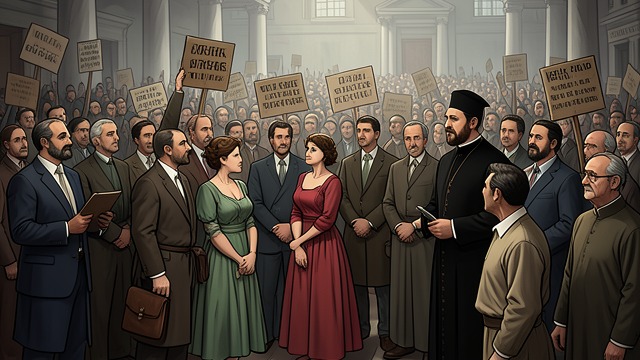
Support Beyond the Political Circle
Community Comes Forward
Asian American farmers, business owners, students, and a minister support Jenny during her legal case.
Their solidarity differs from the cadre’s demand for ideological unity; it is offered without requiring Jenny to perform leadership.
Belonging Reconsidered
Jenny receives a community connection her father had avoided and she had not known how to claim.
During the farmhouse stay
1942
May 1974
Before the Monticello robbery
During Jenny’s trial
